
Realty Group

Hawaii Kai.

The only planned marina community in Hawaii.

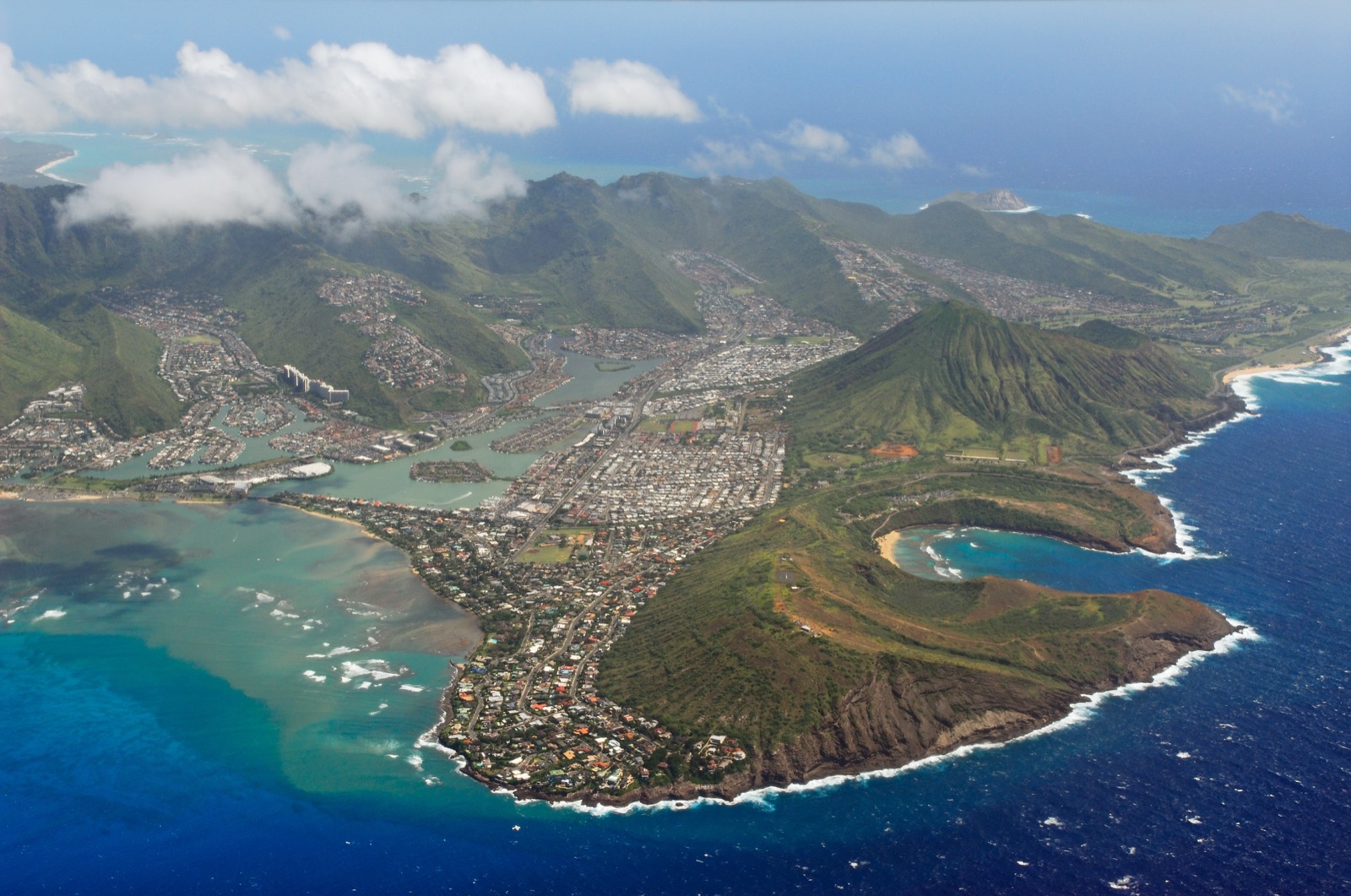
East of Diamond Head, past Aina Haina, the road opens up. Hawaii Kai stretches from Maunalua Bay to Makapuu — about 30,000 residents living in a master-planned neighborhood that didn't exist until Henry Kaiser drained a 6,000-acre marsh in 1959. Boat slips off the back lanai. Kaiser High School ranked among Oahu's stronger publics. Sandy Beach, Hanauma Bay, and Koko Crater all within ten minutes.

It's also the most engineered neighborhood in Hawaii. Which matters more than buyers realize.

The Big Picture

What Hawaii Kai actually is.

Hawaii Kai sits on the southeast corner of Oahu, bounded by Maunalua Bay to the south, Koko Head to the east, the Koolau ridgeline to the north, and Aina Haina to the west. The neighborhood was master-planned by Henry J. Kaiser starting in 1959 — when he acquired a long-term lease on roughly 6,000 acres of marshland and fishpond from Bishop Estate (now Kamehameha Schools). Over the next two decades, his development arm built out about 7,000 homes, the marina system, and the road grid that's still in use today.

What makes Hawaii Kai different from every other Honolulu neighborhood: it's the only one that was planned and built as one project, on land that didn't previously support residential development. Kuapa Pond — the body of water at the center of the marina — was originally one of the largest ancient Hawaiian fishponds on Oahu. Kaiser's team dredged it deeper, opened a channel to the ocean, and turned it into a navigable marina.

The mix today: roughly 80% single-family, 15% townhouse/low-rise condo, 5% mid-rise condo (mostly along Kalanianaole Highway). The single-family inventory is the story here — Hawaii Kai is one of the largest concentrations of detached homes anywhere on Oahu.

The Market

Hawaii Kai market at a glance.

Median SF Sale Price

Updating

Hawaii Kai region · SF

Days on Market (median)

Updating

Hawaii Kai region · SF

Price per Sq Ft (median)

Updating

Hawaii Kai region · SF

Months of Supply

Updating

Balanced market = 4–6 months

Source: HiCentral MLS via InfoSpark, Hawaii Kai region. Refreshed monthly. Note: Hawaii Kai's regional median masks the wide subdivision spread. Portlock pulls 3–5x the regional median; Kalama Valley sits below. The subdivision-specific data tells the more useful story.

The Inventory

The subdivisions, the basics.

Hawaii Kai is at least 12 distinct subdivisions stitched together by Kalanianaole Highway. Each was built in a specific era, prices in its own range, and attracts its own buyer profile. Most online listings group everything as "Hawaii Kai." We don't.

Portlock

Trophy coastal · $5M–$20M+ · Oceanfront and bluff lots

The coastal peninsula on the western edge of Hawaii Kai, fronting Maunalua Bay. Direct oceanfront homes, bluff-edge homes, and a tightly-held set of estate lots. The neighborhood pulls trophy-tier pricing — recent sales above $20M have happened — and the buyer profile is more "Kahala or Portlock" than "anywhere else in Hawaii Kai." Note: Portlock is technically part of Hawaii Kai (ZIP 96825), but the market behaves more like Kahala in pricing terms and turnover.

Mariner's Ridge

Established hillside · $1.5M–$3M · 7,500–12,000 sf lots · Built late 1970s–early 1980s

The hillside neighborhood overlooking the marina and bay. Predominantly two-story single-family on terraced lots, built between roughly 1977 and 1983. View premium on the higher elevation streets (Lumahai, Niumalu, Mahimahi). Strong family draw — Hahaione Elementary catchment and walkable to Kaiser High. The original Bishop Estate leasehold inventory in Mariner's Ridge largely converted to fee simple via HRS Chapter 516 during the 1980s and 1990s — most homes today are fee simple.

Mariner's Cove

Marina-front · $1.5M–$5M+ · Canal and marina-front lots · Some with deeded boat slips

The blocks fronting the marina's interior canals. Distinctive turquoise water, low boat traffic, and direct dock access for the lots with deeded slip ownership. The marina-front pricing premium over equivalent interior Hawaii Kai homes is typically $300K–$1M+ depending on slip size and canal location. Slip ownership is the key diligence point — see below on the marina dynamics.

Mariner's Valley

Interior family · $1.2M–$2M · Built 1970s · Quiet residential

The interior valley running north from the marina. Family-oriented, slightly older inventory than Mariner's Ridge, mostly single-story on flat lots. Lower view premium, lower pricing, strong school catchment.

Hahaione Valley

Interior family · $1M–$2M · Mix of SF and townhouses · Built 1970s–80s

One of the larger interior neighborhoods, anchored by Hahaione Elementary and Hahaione Park. Mix of single-family lots and townhouse complexes — buyers can enter the Hawaii Kai market at the lower end of this subdivision more affordably than elsewhere. Strong family demand.

Kalama Valley

Interior family · $900K–$1.5M · Smaller lots · Built 1970s

The lower-priced end of Hawaii Kai single-family. Smaller lots, more compact homes, but the same school zone access as the higher tiers. Entry point for many first-time Hawaii Kai buyers — and for buyers who want to live in Hawaii Kai but can't enter at the Mariner's Ridge price point.

Koko Kai & Koko Head Terrace

Coastal hillside · $1.8M–$4M · Variable lots · Established coastal

The hillside neighborhoods east of Portlock and below Koko Head crater. Coastal views, mature landscaping, mix of original 1960s–70s builds and renovated/rebuilt homes. Quieter and more spread out than the Mariner's subdivisions. Some lots have direct Sandy Beach / Lanai Lookout access via shoreline trails.

Hawaii Kai Marina Condos (West Marina, East Marina, Anchorage)

Marina-front low-rise · $700K–$1.5M · Condo + townhouse · Some with slip allocation

The mid-rise and low-rise condo inventory along the marina edges. Lower entry point than single-family Hawaii Kai, marina lifestyle without the lot maintenance, and some buildings have slip allocations attached to unit ownership. Worth considering for buyers who want the marina without the single-family carrying cost.

Lifestyle

What it's actually like to live here.

Coast and crater

Hawaii Kai's outdoor anchor is the coastline from Maunalua Bay around Koko Head and out to Makapuu. Hanauma Bay (with the post-2020 reservation system) for snorkel. Sandy Beach for body boarding. Makapuu Lookout and lighthouse trail. Halona Blowhole. Lanai Lookout. Koko Crater Trail (1,048 wooden steps for sunrise stairs masochists). Maunalua Bay for calmer paddle and kayak. This is the side of Oahu where the trade winds hit first — windy in winter, warm-water swimmable in summer.

The marina + the boats

Hawaii Kai Marina is the largest marina in Hawaii, with roughly 1,200 boat slips. Some are deeded to specific homes (Mariner's Cove); others are rented through Hawaii Kai Marina Management with a waitlist. Boat activity is heavy on weekends — paddle boards, jet skis, small fishing boats, occasional sailboats. The marina also hosts the Hawaii Kai Boat House (event venue) and the seafood restaurants along the Hawaii Kai Towne Center side. If you want a boat lifestyle within driving distance of downtown Honolulu, this is the only option.

Family infrastructure

Hawaii Kai is built for families in a way most of Oahu isn't. Hahaione Park (the largest community park), Kuapa Pond Park, the Hawaii Kai library, Hawaii Kai Towne Center (Costco, Safeway, City Mill, the original food court), and Kaiser High School — the public high school zone here is among Oahu's stronger. Middle school is Niu Valley. Elementary feeders are Hahaione, Kamiloiki, and Kaiser-area schools. Less private-school commute pull than Kahala, but plenty of Hawaii Kai families do drive their kids to Punahou, 'Iolani, or Mid-Pac (45–60 min each way).

Why This Neighborhood Is Different

Hawaii Kai was a marsh. That still matters today.

Most Hawaii Kai buyers don't realize the neighborhood didn't exist as residential land before 1959. In that year, Henry J. Kaiser — yes, the steel-and-shipyards Kaiser — bought a long-term lease from Bishop Estate on roughly 6,000 acres of coastal marshland and the ancient Kuapa Fishpond. Over the next twenty years, his development company drained the marsh, dredged Kuapa Pond into a 1,200-slip marina, cut the channel that connects the marina to Maunalua Bay, and built about 7,000 homes on the reclaimed land.

Hawaii Kai is Hawaii's first planned community. The road grid, the marina system, the cul-de-sac subdivisions, even the orientation of most lots — all of it was deliberately engineered between 1959 and 1979. There's nothing else like it in the state.

Three things follow from Hawaii Kai's engineered origin that don't apply the same way in older Honolulu neighborhoods:

1. The marina is a real asset class

Hawaii Kai Marina has roughly 1,200 slips, managed today by Hawaii Kai Marina Management (privately held). Some slips are deeded — they transfer with specific Mariner's Cove and marina-front properties at sale. Others are rented from the marina operator, with a waitlist that has moved slowly for years. Deeded slips meaningfully increase property value — typically $200K–$500K+ over a comparable home without one. Buyers shopping marina-adjacent homes need to verify slip ownership status (deeded? rented? assigned but not deeded?) before writing an offer. We pull this before we quote a number.

2. Flood zones are real, and the maps matter

Significant portions of Hawaii Kai sit in FEMA flood zone designations — AE (high risk, base flood elevation determined), VE (high risk, velocity hazard from wave action), or X (lower risk, shaded). The flood zone designation drives whether the lender will require flood insurance, what that insurance costs, and what disclosure obligations attach to the property. Homes in zones AE or VE typically carry $1,500–$5,000+/yr in flood insurance — a meaningful monthly carrying cost most online listings don't surface. Higher-elevation streets (much of Mariner's Ridge, Koko Kai's upper blocks) sit in zone X and don't carry the same exposure.

3. Drainage and grade matter at the lot level

Some of the older 1960s-era subdivisions on the lower elevation flats have ongoing drainage and settling questions — Kaiser's engineering was state-of-the-art for 1962, but sixty-plus years of sea-level change and groundwater behavior have surfaced issues on specific streets. Newer Hawaii Kai construction (post-1985, on higher ground) doesn't share the same exposure. A walk-through with a Realtor who knows which streets to ask harder questions about is genuinely valuable here.

Recent Activity

What's actually been transacting.

A selection of recent Hawaii Kai sales — across the subdivision tiers and marina vs. interior.

Portlock / Coastal

Portlock — Coastal Premium

Representative recent Portlock or coastal premium trade. High-profile $5M+ tier — useful for buyers comparing Portlock to Kahala beachfront pricing.

Heart of the Market

Mariner's Ridge — Family Single-Family

Representative recent Mariner's Ridge / Hahaione Valley trade in the $1.5M–$2.5M tier. The heart of the Hawaii Kai single-family market.

Marina-Front

Mariner's Cove — Slip-Included

Recent Mariner's Cove marina-front activity or a marina-front condo with slip allocation. Useful comp set when underwriting any boat-included Hawaii Kai property.

Refreshed quarterly from MLS sold data.

Is It Right For You?

Hawaii Kai fits some buyers. Not everyone.

Hawaii Kai fits you if you…

  • Want a single-family home with a yard
  • Are okay with a 25–30 minute downtown commute
  • Have school-age kids (or plan to)
  • Want boat / marina access
  • Value subdivision diversity and predictable streets
  • Will diligence flood zones, slip status, drainage
  • Prefer trade-wind / windward feel
  • Are buying for family + long hold

Look elsewhere if you…

  • Need to be walkable to downtown / your office
  • Commute multiple days a week and need it short
  • Want urban density and nightlife at your doorstep
  • Don't care about water sports
  • Want character or historic homes
  • Want to ignore engineering details entirely
  • Prefer the leeward / Kakaʻako climate
  • Are buying as a short-term flip
Featured Listings

Available now.

IDX integration in progress. Use the link below to browse current Hawaii Kai inventory.

Work With Us

Working Hawaii Kai with us.

Browse Hawaii Kai

See every available Hawaii Kai home. New listings hit your inbox the day they hit the MLS.

Selling in Hawaii Kai

A real CMA that accounts for subdivision, slip status, flood zone, and lot grade. 24-hour turnaround.

Just want to talk

A 15-minute call. Tell us what you're trying to do; we'll tell you honestly what we think.

FAQs

Common questions about Hawaii Kai.

How long is the commute from Hawaii Kai to downtown Honolulu?

Roughly 25–35 minutes during normal traffic, 40–55 minutes in heavy commuter rush. Hawaii Kai has only one road in and out — Kalanianaole Highway — so weather, accidents, or events at Hanauma Bay can push the morning commute significantly. The flip side: outside rush hour, the drive is one of the most scenic commutes on Oahu (along the south shore with Diamond Head and the Koko Head ridgeline in view). Many Hawaii Kai professionals adjust to 7 AM departures or hybrid work to manage the highway choke point.

What's the difference between Mariner's Ridge, Mariner's Cove, and Mariner's Valley?

All three were developed in the late 1970s and early 1980s as part of Kaiser's master plan, but they sit at different elevations and pricing tiers. Mariner's Ridge is the hillside above the marina — view premium, two-story homes on terraced lots, $1.5M–$3M. Mariner's Cove is the marina-front pocket on the canals — boat-slip-included homes, $1.5M–$5M+. Mariner's Valley is the flat interior — quieter, slightly lower price point, $1.2M–$2M. Same school zone, different lifestyle and price.

Is the Hawaii Kai marina publicly accessible?

The water itself is public navigable water — anyone can paddle, kayak, jet-ski, or boat in the marina. Slip access is private (managed by Hawaii Kai Marina Management for rented slips, or deeded with specific properties). There's a public boat ramp at the marina entrance for trailered boats. Most marina activity is concentrated on weekends.

How much is flood insurance in Hawaii Kai?

Depends entirely on the FEMA flood zone designation for the specific property. Homes in zone X (lower risk) often don't require flood insurance and can carry it for $500–$1,000/yr through NFIP if voluntarily added. Homes in zone AE typically run $1,500–$4,000/yr depending on base flood elevation and coverage level. Homes in zone VE (waterfront with wave hazard) can run $4,000–$10,000+/yr. Always check the flood zone before underwriting a Hawaii Kai purchase — the same square footage on two different streets can carry meaningfully different monthly costs.

Is Hawaii Kai a good investment?

The honest answer: Hawaii Kai is a strong neighborhood for buyers who plan to live in their home long-term (5+ years), value family infrastructure and school zones, and accept the trade-off of the commute. As a pure investment play — chasing appreciation alone — Hawaii Kai has appreciated steadily but not dramatically over the past 20 years. The buyer pool is deep enough that resale is reliable; the inventory is large enough that scarcity-driven price spikes are rare. If you're looking for a yard, a school zone, and a quiet stretch of east-shore coastline, the math usually works. If you're looking for the next Kakaʻako-style appreciation curve, that's not what Hawaii Kai is.

Are there any oceanfront homes in Hawaii Kai under $5M?

Rarely on direct oceanfront — Portlock and the coastal blocks of Koko Kai start in the high $4Ms and run well above $10M for the premier lots. Marina-front (different from oceanfront) is a separate market and accessible from $1.5M–$3M for canal-front Mariner's Cove homes. Buyers conflating "oceanfront Hawaii Kai" with "marina-front Hawaii Kai" sometimes underwrite the wrong price point.

Are there leasehold homes in Hawaii Kai?

Most original Kaiser-era Bishop Estate leasehold inventory converted to fee simple via Hawaii's lease-to-fee conversion law (HRS Chapter 516) during the 1980s and 1990s. The vast majority of Hawaii Kai single-family today is fee simple. A small number of older condo buildings and a handful of single-family parcels may still carry a leasehold structure — always verify on the property-specific title abstract.

What schools serve Hawaii Kai?

Public catchment is Hahaione Elementary or Kamiloiki Elementary → Niu Valley Middle School → Henry J. Kaiser High School. Kaiser High is one of Oahu's stronger public high schools by graduation outcomes and college matriculation. Hawaii Kai families who pursue private school typically commute to Punahou (40–45 min), 'Iolani (35–40 min), or Mid-Pacific Institute (35–40 min) — long drives that some accept and some don't.