Realty Group

Waikiki.

Two miles of beach, fifty residential condo buildings, and the most complicated underwriting in Hawaii.

The most famous square mile of real estate in the Pacific is also the most heavily marketed and the most easily misread. Waikiki condos can list at $300K or $30M. Some are fee simple, some are leasehold. Some are legally allowed to host short-term rental, some absolutely aren't. The unit listing photos don't tell you which. The lifestyle marketing doesn't either.

That's why the buying conversation in Waikiki starts before the property tour — with the questions about what you're actually buying.

The Big Picture

What Waikiki actually is.

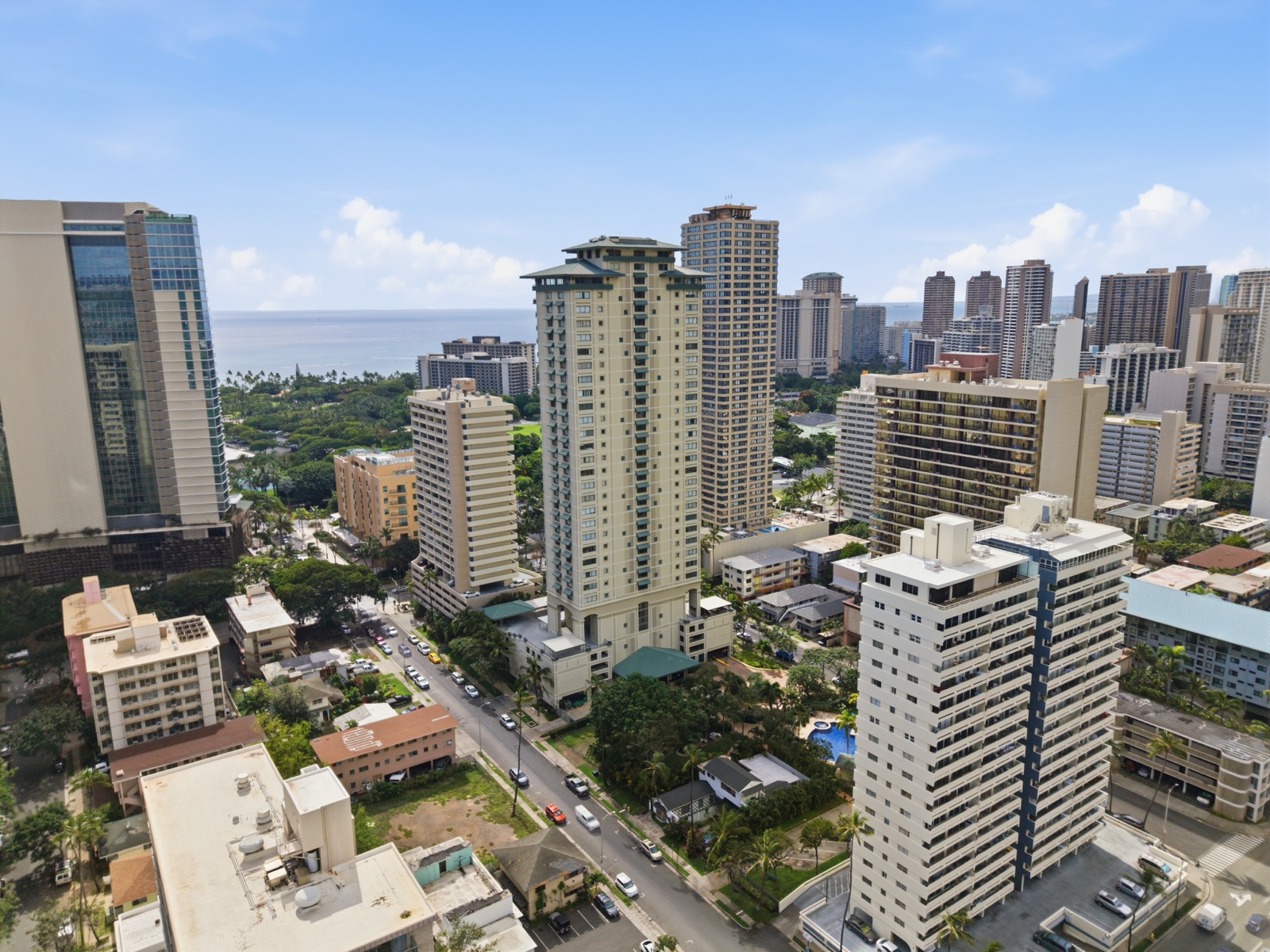
Waikiki sits between Ala Moana (west, across the Ala Wai Canal), Kapahulu Avenue and the Ala Wai Golf Course (north and east), and the Pacific Ocean (south). The Ala Wai Canal, built in 1928 to drain the original Waikiki wetlands, defines the northern and western boundary. Diamond Head crater anchors the eastern end. The neighborhood is roughly one square mile.

Three things share this square mile: about 30,000 daily visitors staying in hotels and short-term rentals, roughly 25,000 permanent residents living in condo buildings, and the entire commercial spine of Hawaii's tourism industry. The mix of uses — and the zoning that governs which buildings can host which uses — is what makes Waikiki real estate unlike any other Honolulu neighborhood.

The mix today: roughly 60% hotel/resort, 30% residential condo, 8% hybrid condotel, 2% commercial/retail/restaurant. The residential condo inventory is large (somewhere around 12,000–15,000 condo units across 50+ buildings) but distributed across buildings with wildly different rules, lease structures, and legal use.

The Market

Waikiki market at a glance.

Median Condo Sale Price

Updating

Metro region · all condos

Days on Market (median)

Updating

Metro region · all condos

Price per Sq Ft (median)

Updating

Metro region · all condos

Months of Supply

Updating

Balanced market = 4–6 months

Source: HiCentral MLS via InfoSpark, Metro region (includes Waikiki with Ala Moana, Kakaʻako, and downtown). Refreshed monthly. Note: The Metro region median masks Waikiki's enormous spread — fee simple vs leasehold, and resort-zoned vs apartment-zoned — drive bigger price differences than floor or view. Building-specific data tells the truer story.

The Inventory

The buildings, the basics.

Waikiki has more residential condo buildings than any other Honolulu neighborhood — 50+ towers across a one-square-mile footprint. Each one has its own lease status, zoning category, and short-term rental rules. Here are the ones you'll encounter most often, organized by tier and structure.

Ritz-Carlton Residences Waikiki Beach (2016)

Trophy luxury · ~552 units · Fee simple · No legal STR

The post-2010 luxury anchor of Waikiki. Two-tower complex on Kuhio Avenue's western end, with full Ritz-Carlton hotel services available to residents (concierge, housekeeping, room service). Pricing typically $1.5M–$8M+ depending on floor, view, and tower. Fee simple ownership — no lease complications. Not zoned for short-term rental at the unit level; long-term residential or seasonal owner-occupancy.

Trump International Hotel Waikiki (2009)

Upper-luxury hotel-condo · 462 units · Fee simple · Hotel rental pool

38-story hotel-condo on Saratoga Road. Units can be owned and occupied as second homes, or enrolled in the Trump-managed hotel rental program for short-term income. Owner-occupants and rental-pool participants share the building. Pricing typically $700K–$3M+. Hotel-condo structure means different financing, different ownership economics, different rules.

Allure Waikiki (2010)

Upper-mid · 295 units · City + ocean views · Fee simple · No legal STR

35-story residential-only tower at the western edge of Waikiki, near the Convention Center. Pricing typically $600K–$1.5M. Fee simple, post-2010 construction (no Ordinance 18-14 retrofit exposure), residential-only zoning. One of the cleaner Waikiki underwrites for owner-occupants who want walkability to Ala Moana and Waikiki without resort-zone complexity.

Watermark Waikiki (2008)

Upper-mid · 200 units · Marina + city views · Fee simple · Mixed STR status

35-story tower fronting the Ala Wai Harbor's western edge. Pricing typically $600K–$1.4M. Building was originally marketed with hotel-condo flexibility but rental rules have evolved — verify current STR-allowed status for any specific unit before underwriting as investment.

Ilikai Apartments (1965)

Mid-market historic · 1,009 units · Mixed leasehold/fee simple · Hotel-condo with legal STR

The iconic curved building at the western entrance to Waikiki, opened in 1965 — featured in Hawaii Five-O's original opening shot. Hotel-condo structure with units in the Aqua/Marriott rental pool. Lease status varies by unit (some converted to fee simple, some still leasehold). Pricing typically $250K–$1.5M depending on view, leasehold status, and unit configuration. This is one of Waikiki's most complex underwrites — every unit needs individual diligence on lease term, ground rent, and short-term-rental eligibility.

Waikiki Shore (1957)

Beachfront historic · 168 units · Mostly leasehold · Resort-zoned legal STR

The only condo building directly on Waikiki Beach — built in 1957, one of the oldest residential structures in Waikiki. Direct sand frontage between the Halekulani and Outrigger Reef. Mostly leasehold (land lease from Outrigger Hotels & Resorts, with various renegotiation reopener dates). Resort-zoned for short-term rental. Pricing typically $400K–$2M+ depending on view, floor, and lease term remaining.

Waikiki Beach Tower (1983)

Upper-mid · 140 units · Beachfront-adjacent · Fee simple · Legal STR

One of the few post-1975 fee simple condos with legal short-term rental allowed. Pricing typically $1.5M–$5M for the larger units. Premium Waikiki investment vehicle for buyers who want fee simple ownership AND legal STR cash flow.

Aston Waikiki Beach Tower (1978)

Mid-luxury hotel-condo · 140 units · Direct beachfront · Fee simple · Hotel rental pool

39-story beachfront hotel-condo. Units typically in the Aston-managed rental pool. Pricing typically $1.2M–$4M. Beachfront pricing with hotel-condo income mechanics — strong investor-buyer fit, owner-occupant flexibility, but understand the rental-pool economics before underwriting.

Liliuokalani Plaza Towers / Sands of Kahala (1979)

Mid-market · 244 units · Mauka views · Leasehold (Queen Liliuokalani Trust)

Two-tower complex at the eastern end of Waikiki near Kapiolani Park. Land lease from the Queen Liliuokalani Trust. Pricing typically $250K–$500K depending on lease term remaining. Lower entry point reflects the leasehold structure — buyers should pull the current lease document and verify ground rent and remaining term before underwriting.

Diamond Head Vista (1971)

Mid-market · 200 units · Pre-1975 · Subject to Ord. 18-14 retrofit

30-story Waikiki tower near Kapahulu Avenue. Pre-1975 construction — subject to Honolulu Ordinance 18-14 sprinkler retrofit requirement (same legal framework as older Ala Moana buildings). Pricing typically $400K–$700K. Verify retrofit completion status before offer.

Tradewinds Hotel-Condo (1973)

Mid-market hotel-condo · ~300 units · Mixed fee/leasehold · Legal STR

Resort-zoned hotel-condo on Kuhio Avenue. Triple complexity: pre-1975 retrofit exposure, mixed leasehold/fee simple inventory, hotel-condo rental pool. Pricing typically $200K–$500K. Strong investor cash-flow potential when underwritten correctly, but the underwrite has to account for all three structural factors.

Lifestyle

What it's actually like to live here.

The beach itself

Two miles of public beach broken into sub-sections: Duke Kahanamoku Beach (in front of Hilton Hawaiian Village, calm-water lagoon), Fort DeRussy Beach (the quieter stretch), Gray's Beach (in front of the Halekulani), Royal-Moana Beach (the iconic stretch in front of the Royal Hawaiian and Moana Surfrider), Kuhio Beach (eastern Waikiki, with the wall and the calm-water pool), and Queen's Surf Beach (Kapiolani Park end). The waves at Queen's, Canoes, Pops, and Threes are world-famous surf breaks. Local-tip: residents swim and paddle in the early morning before the crowds.

Restaurants, retail, the resort overlay

Waikiki's restaurant density is higher than anywhere else in Hawaii. From Roy Yamaguchi's Eating House 1849 to Hau Tree Lanai, House Without a Key, Dukes, Tropics at the Hilton, Hideout at the Laylow, the Sky Waikiki rooftop, and dozens of high-quality casual options across Kuhio, Lewers, and Kalakaua. The Royal Hawaiian Center is the upscale retail spine; International Marketplace is the mid-tier anchor; ABC Stores dot every block. The trade-off: the tourist-volume pulse is constant. Residents adjust to it; some embrace it, some retreat to Diamond Head and Kapiolani Park.

Walking distance to everything

Most Waikiki addresses are within a 15-minute walk of the beach, Ala Moana Center, the Honolulu Zoo, Kapiolani Park, and the Diamond Head Trail entrance. Public transit is extensive. The Honolulu Skyline rail's eventual Ala Moana terminus puts faster downtown connectivity on a 5–10 year horizon. For residents who don't need to commute daily, Waikiki is one of the most car-optional addresses in the state.

Why This Neighborhood Is Different

Before the unit tour, the two questions.

Most Honolulu neighborhoods have one structural underwriting question that matters most — Reserved Housing in Kakaʻako, lot value in Kahala, flood zone in Hawaii Kai, building age in Ala Moana. Waikiki has two, and they often interact. A Waikiki condo's value isn't really set by the unit. It's set by these two questions:

Question 1 — Fee simple or leasehold?

Waikiki has the highest concentration of leasehold residential condos in Honolulu. Many older Waikiki buildings — particularly the 1960s and 1970s towers — sit on land leased from outside owners: Kamehameha Schools / Bishop Estate, the Queen Liliuokalani Trust, Outrigger Hotels & Resorts, the Kosasa family (ABC Stores), and several smaller private trusts. Lease structures vary wildly. Some buildings have leases with 60+ years remaining. Some have 25 years. Some have already converted to fee simple unit-by-unit. A few have leases approaching renegotiation reopener dates where ground rent can step up materially. What this means for a buyer: the list price of a leasehold Waikiki unit is not a discount waiting to be captured. It reflects the lease term remaining, the renegotiability of the ground rent, the conversion-to-fee-simple availability (or absence), and the unit's exit liquidity. The pricing math has to underwrite the lease, not just the unit.

Question 2 — Is the building legally allowed to host short-term rental?

Honolulu Bill 41 (passed 2022) tightened short-term rental rules across most of Oahu — most residential zones now require a minimum 90-day rental term. Waikiki is the major exception. Waikiki's Resort District zoning (covering specific blocks, primarily the beach side of Kalakaua and parts of Kuhio Avenue) preserves legal short-term rental in resort-zoned buildings. But Resort District zoning is building-specific, not neighborhood-wide. A condo a block apart from a hotel may sit in a residential zone where short-term rental is prohibited — even though it's still "Waikiki." Hotel-condo buildings (Ilikai, Trump Waikiki, Aston Waikiki Beach Tower, Tradewinds, others) typically have legal STR built into their structure. Residential-only buildings in apartment-zoned areas typically don't. What this means: Waikiki's "investment condo" reputation is real for the buildings legally zoned for it — and a complete underwriting mismatch for the ones that aren't.

How the two questions interact

The intersection is where Waikiki underwriting actually lives. A fee simple unit in a non-STR-allowed building is a residential ownership play — strong long-term hold, weak short-term cash flow. A leasehold unit in an STR-allowed resort-zoned building is an income vehicle — strong short-term cash flow, weaker long-term equity build (because the lease eventually runs out). A fee simple unit in an STR-allowed building is the trophy — both ownership and income, and priced accordingly.

We diligence both questions before we let a buyer write an offer. That's the only way the Waikiki math works honestly.

Recent Activity

What's actually been transacting.

A selection of recent Waikiki sales — across the tiers, lease structures, and zoning categories.

Luxury Fee Simple

Ritz-Carlton / Trump / Allure

Representative recent luxury-tier trade ($1.5M+). Fee simple, modern construction — the cleanest Waikiki underwrites.

Mid-Tier

Watermark / Aston / Waikiki Shore

Representative recent mid-tier trade ($600K–$1.5M). Mix of beachfront and beachfront-adjacent — verify lease and zoning before extrapolating.

Leasehold / Older

Ilikai / Liliuokalani / Diamond Head Vista

Representative recent older-building or leasehold trade. Frames around what the unit's actual lease + zoning situation was — the headline price doesn't tell the story.

Refreshed quarterly from MLS sold data.

Is It Right For You?

Waikiki fits some buyers. Not everyone.

Waikiki fits you if you…

  • Want a beach-walk lifestyle in the densest part of Honolulu
  • Are buying as a second home / part-time use
  • Are evaluating a legal short-term rental investment
  • Will diligence leasehold + zoning before offering
  • Are okay with tourist density and resort overlay
  • Want walking-distance access to Hawaii's largest dining/retail concentration
  • Plan to be in Waikiki long enough to learn the building-by-building rules

Look elsewhere if you…

  • Want quiet residential streets
  • Need a daily-use family home with a yard
  • Want simple residential underwriting
  • Want to ignore structural underwriting questions
  • Want a quieter, suburban setting
  • Prefer Kahala-style residential calm
  • Are making a fast purchase decision
Featured Listings

Available now.

IDX integration in progress. Use the link below to browse current Waikiki inventory across all buildings.

Work With Us

Working Waikiki with us.

Browse Waikiki

See every available Waikiki condo. New listings hit your inbox the day they hit the MLS. Filter by fee simple, by resort zoning, by view — whatever matches your underwrite.

Selling in Waikiki

A real CMA that answers the two questions — lease structure, zoning, comp set tailored to your building. 24-hour turnaround.

Just want to talk

A 15-minute call. Tell us what you're trying to do; we'll tell you honestly what we think.

FAQs

Common questions about Waikiki.

What's the difference between fee simple and leasehold in Waikiki?

Fee simple means you own the building AND the land underneath it — same as standard residential ownership in most U.S. markets. Leasehold means you own the building (or your unit's share of it) but pay ground rent to the landowner, who continues to own the dirt. In Waikiki, many older buildings (1960s and 1970s towers) sit on land leased from outside owners — Kamehameha Schools, the Queen Liliuokalani Trust, Outrigger Hotels & Resorts, the Kosasa family / ABC Stores, and several private trusts. Lease terms remaining vary wildly. Leasehold units typically sell at a discount to comparable fee simple units, but the discount reflects real underwriting risk — lease term remaining, renegotiable ground rent, exit liquidity in the secondary market.

Can I do short-term rental in any Waikiki condo I buy?

No — and assuming yes is the most common Waikiki underwriting mistake. Honolulu Bill 41 (passed 2022) tightened short-term rental rules across most of Oahu, requiring 90-day minimum rental terms in most zones. Waikiki's Resort District zoning preserves legal short-term rental in specific resort-zoned buildings — primarily the hotel-condo and resort-zoned residential towers. Apartment-zoned residential Waikiki buildings (and there are many) generally cannot host short-term rental. Always verify the specific building's zoning category and the unit's legal short-term rental eligibility before underwriting on STR cash flow.

What is Honolulu Bill 41?

Bill 41 is the 2022 Honolulu short-term rental ordinance that tightened rules island-wide. It generally requires 30–90 day minimum stays in most residential zones, preserving short-term rental primarily in resort-zoned areas of Waikiki (and a few other resort-zoned pockets). Bill 41 has been litigated and modified — the current state of enforcement and definitions has evolved since passage. If you're underwriting a Waikiki condo on STR potential, the building's specific zoning + Bill 41 compliance status is the diligence point that matters most.

What's a "condotel"?

A condotel (hotel-condo) is a building structured as condominium ownership where the units are managed by a hotel operator in a rental pool. Owners can choose to occupy their units or place them in the rental pool for short-term-rental income managed by the hotel. Hotel-condo examples in Waikiki: Trump International Hotel Waikiki, Aston Waikiki Beach Tower, Ilikai Apartments (Aqua/Marriott pool), Tradewinds. Hotel-condo financing is different from standard residential — many lenders won't finance them with conventional mortgages. Underwriting requires understanding the rental-pool economics (operator split, marketing fees, peak/off-peak occupancy, owner-use restrictions). Different asset class than a standard condo.

Are there any single-family homes in Waikiki?

Effectively no. Waikiki is zoned almost exclusively for high-rise residential, hotel, mixed-use, and resort uses. If you want a single-family home in this area of Honolulu, look at Diamond Head, Kapahulu, or Kaimuki — adjacent neighborhoods with single-family inventory.

Can I see the beach from any Waikiki condo?

Many beach-block buildings (one block back from Kalakaua Avenue) have ocean views from upper floors. The premium beachfront-direct buildings (Waikiki Shore, Aston Waikiki Beach Tower, Waikiki Beach Tower, Ilikai Apartments) have unobstructed ocean views from most units. Interior Waikiki buildings — those on Kuhio Avenue and toward the Ala Wai Canal — typically have mountain or city views, with ocean views only from higher floors. View clarity is a building-specific question — verify the view from the actual unit before underwriting.

What's the parking situation in Waikiki condos?

Highly building-dependent. Many older Waikiki buildings (especially leasehold towers) include zero or one parking space per unit. Newer luxury buildings (Ritz-Carlton Residences, Trump Waikiki, Allure) include one space, with second-space availability per unit varying. Some buildings have street parking only. Some have valet. Waikiki street parking is heavily metered and tourist-saturated — relying on it is rarely realistic. Always verify parking allocation per unit before offering.

Is Waikiki a good investment?

Depends entirely on which Waikiki condo. A fee simple unit in a legal-STR-zoned building can be a strong investment vehicle with both equity appreciation and short-term-rental cash flow. A leasehold unit in a residential-only zone is a different proposition — limited appreciation runway, no STR income, lease term running down. A fee simple unit in a non-STR zone is a strong long-term hold but a weak income asset. The honest answer: Waikiki investment math has to start with the two structural questions (lease + zoning), not with the building's reputation or the listing photos.