Realty Group

Kakaʻako.

Built from the ground up — and still building.

Honolulu's newest neighborhood is also one of its most misunderstood. In ten years, what used to be warehouses and industrial blocks has become the densest concentration of new luxury condos in the state. Towers go up faster than residents memorize the names of them. Most online guides can't keep up.

This one does.

The Big Picture

What Kakaʻako actually is.

Kakaʻako sits between downtown Honolulu and Ala Moana, hugging the south shore. Roughly bounded by Piikoi Street to the west, Punchbowl to the east, Beretania to the north, and the ocean to the south. Twelve minutes to Diamond Head, eight minutes to the airport, three minutes to Ala Moana Beach Park.

What makes Kakaʻako different from every other Honolulu neighborhood: almost all of it is brand-new. The master plan started in earnest around 2014, accelerated through the Howard Hughes Ward Village development, and is still actively being built. Most of the residential buildings here are less than ten years old. A few are still under construction.

The mix: roughly 90% high-rise condo, 10% low-rise mixed-use. Almost no single-family. If you're looking for a yard, this isn't your neighborhood. If you're looking for a brand-new tower with a private pool deck, a chef's kitchen, and Ala Moana Beach Park as your front yard — Kakaʻako is the only Honolulu neighborhood that delivers it at scale.

The Market

Kakaʻako market at a glance.

Median Condo Sale Price

Updating

Metro region · all condos

Days on Market (median)

Updating

Metro region · all condos

Price per Sq Ft (median)

Updating

Metro region · all condos

Months of Supply

Updating

Balanced market = 4–6 months

Source: HiCentral MLS via InfoSpark, Metro region (includes Kakaʻako). Refreshed monthly. Note: HiCentral's "Metro" region aggregates Kakaʻako with downtown, Waikiki, Ala Moana, and Makiki — so building-specific data tells the more accurate story.

The Inventory

The buildings, the basics.

Not every Kakaʻako condo is the same building dressed up differently. Here's what each one actually is — pricing tier, vibe, and the deed-restriction situation.

Ward Village — Howard Hughes Master Plan Towers

Park Lane Ala Moana (2017)

Luxury · 219 units · Ocean + Diamond Head views · Market-rate only

The high-water mark of Honolulu luxury condo development. Sales above $5M are routine here. Park Lane is technically lower-rise than the Howard Hughes towers — eight stories around a private garden — but it pulls the strongest pricing per square foot in Kakaʻako. If you're shopping at the top of the market, this is the building that anchors the conversation.

Anaha (2017)

Luxury · 317 units · Mountain + ocean views · Mostly market-rate, some Reserved Housing

Anaha was Ward Village's second major tower and set the tone for the rest. Glass-and-curve architecture, a cantilevered glass-bottom pool, restaurants on the ground floor. Strong resale market. Pricing typically $1.5M–$5M depending on unit and view orientation.

Waiea (2016)

Luxury · 174 units · Ocean views · Market-rate only

Ward Village's tallest fully-residential tower. Premium amenities, prestige factor, and the highest sustained pricing in Ward Village outside of Park Lane. Pricing $2M–$8M range.

Ae'o (2018)

Mid-luxury · 466 units · Diamond Head + mountain views · Mostly market-rate, some Reserved Housing

The Whole Foods tower. Anchored by the Ward Village Whole Foods on the ground floor and connected to the surrounding retail district. Larger building, slightly less rarefied than Waiea or Park Lane, but extremely walkable to everything.

Ke Kilohana (2019)

Mid-market · 423 units · Mountain + ocean views · Mostly Reserved Housing

Ward Village's primary Reserved Housing tower. Most units sold for ~30–50% below open-market value to qualified Hawaii residents in exchange for HCDA equity-share obligations. If you're considering buying or selling at Ke Kilohana, the equity-share math materially changes your net — see the Reserved Housing section below.

A'ali'i (2021)

Mid-luxury · 751 units · Wide range of views · Mix of market-rate + Reserved Housing

Ward Village's largest tower. Studios start in the high $400s; two-bedrooms run into the $1M+ range. A'ali'i has 150 Reserved Housing units mixed throughout — about 20% of the building. Resale market is the most active in Kakaʻako given the unit volume.

Koula (2022)

Mid-luxury · 565 units · Diamond Head + mountain views · Mostly market-rate

Koula's design leans more residential than its neighbors — warmer materials, smaller unit count per floor than A'ali'i, more privacy. Pricing $500K–$2.5M+ depending on unit type. Newer building, less resale data yet — most units still close to original developer pricing.

Victoria Place (2024)

Luxury · 350 units · Ocean + Ala Moana views · Market-rate only

Ward Village's newest completed tower (open 2024). One of the few Howard Hughes towers without Reserved Housing — the entire building is open-market. Top-floor units have transacted above $5M. Mid-floor 2-bedrooms typically $1.5M–$2.5M. Disclosure: we represented the seller on a recent Victoria Place sale.

Ulana Ward Village (est. 2026)

Under construction · Mostly Reserved Housing

Ulana is Ward Village's next major Reserved Housing tower — 696 units, predominantly income-restricted. If you're researching Kakaʻako Reserved Housing entry points, Ulana is the active conversation. Lottery-style buyer qualification.

The Park Ward Village (est. 2025–2026)

Under construction · Market-rate luxury

The 41-story Park Ward Village is the newest market-rate tower in active construction. Expected to follow the Victoria Place pricing pattern. Worth tracking if you're patient.

Kalae (est. 2027)

Under construction · Luxury · Market-rate

The newest planned market-rate tower, primarily targeting move-up Ward Village buyers. Currently in pre-sales.

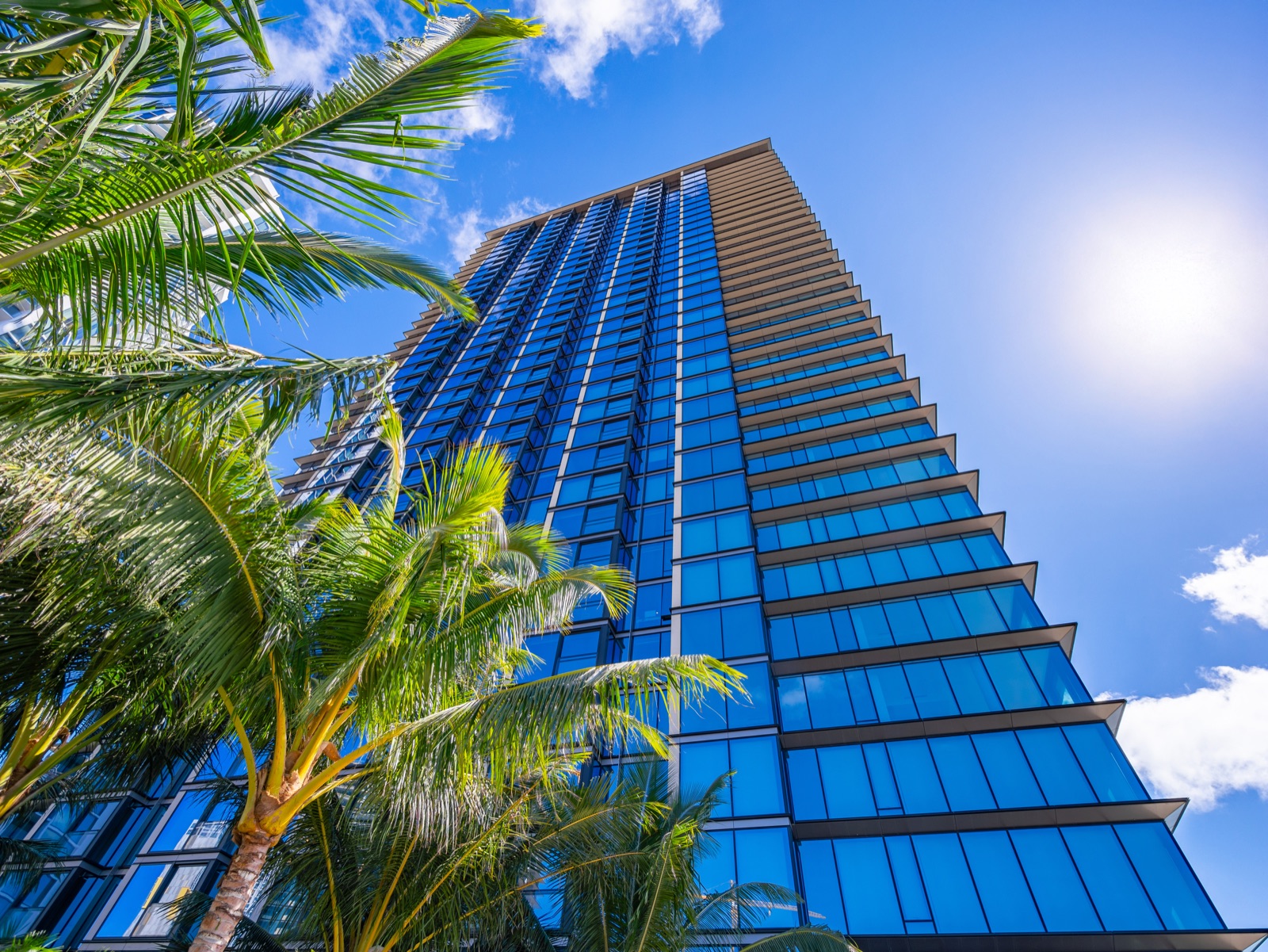
Outside Ward Village — Other Kakaʻako Towers

Halekauwila Place (2014)

Affordable / Mostly Reserved Housing · 204 units · 88 Halekauwila Street

One of the earliest HCDA Reserved Housing developments. Predominantly income-restricted, lower price points, well-located.

Symphony Honolulu (2016)

Mid-market · 388 units · Ala Moana area · Mix of market-rate and below-market units

Slightly older than Ward Village, sits at the edge of Kakaʻako. More urban-grit feel than the polished Howard Hughes corridor.

Keauhou Place (2016)

Mid-market · 423 units · Some Reserved Housing

Another early-Kakaʻako tower, mixed-use with retail on the ground floor.

The Collection (2016)

Mid-luxury · 467 units · Mountain + ocean views

Older than Ward Village but well-maintained. Larger units than typical Kakaʻako, more family-friendly layout.

Kahuina (est. 2027–2028)

Under construction · Mid-luxury + Reserved Housing · 737 units

Stanford Carr's newest Kakaʻako development. Lamakū = market-rate plus 54% HHFDC affordable; Hakuwai = Kamehameha Schools partnership. Studios from the high $600s. Worth tracking if you're entering Kakaʻako.

Lifestyle

What it's actually like to live here.

Walkable everything

Kakaʻako was designed to be walked. SALT at Our Kakaʻako (the restaurant-and-shop district) anchors the south end. Ward Village's main retail spine runs east-west — Whole Foods, T.J. Maxx, the Ward Theaters, Nordstrom Rack, Foodland Farms. Ala Moana Center is a six-minute walk from the eastern edge. You can live in Kakaʻako and not own a car. Many residents don't.

Beach proximity

Ala Moana Beach Park is three minutes from most of Kakaʻako on foot. Magic Island for the calm-water swim, the main beach for the long stretch, the canal for paddle. Sunset over Diamond Head, every night, from your lanai. Kakaʻako Waterfront Park (newly redesigned) extends the green space along the Honolulu Harbor side.

Food and night

The restaurant density per square mile in Kakaʻako rivals downtown without the office-park dead zone. Anything from Moku Kitchen to Merriman's Honolulu to the rotating concepts at SALT. Highway Inn for local food. Coffee culture is strong — Arvo, Honolulu Coffee Co, Morning Glass. Drinks: Bevy, Roy's, Square Barrels. The neighborhood comes alive at night in a way most of Honolulu doesn't.

Why This Neighborhood Is Different

The Reserved Housing math no one explains.

If you're considering a Kakaʻako condo, there's one thing most agents won't bring up — and most online estimators get wrong: Reserved Housing units.

About 20–30% of Kakaʻako's residential inventory carries a deed restriction called Reserved Housing. These units originally sold to qualified Hawaii residents for 30–50% below market value, in exchange for a fixed equity-share obligation to HCDA (Hawaii Community Development Authority). The equity share doesn't expire. It travels with the title. And it materially changes what a seller actually nets at sale.

Here's what that means in practice. A unit that shows $700,000 on Zillow might owe HCDA $200,000 in equity share at the moment of sale — leaving the seller with $500,000 in proceeds before commissions and closing costs. Standard automated valuation models don't account for this. Standard CMAs from agents who don't work Kakaʻako regularly don't catch it either.

Buildings with significant Reserved Housing inventory include Ke Kilohana, A'ali'i (about 150 of 751 units), Ulana (almost all of 696 units), Halekauwila Place, Keauhou Place, and several of the older HCDA-era towers. Victoria Place and Waiea are notable for being market-rate only.

If you're a Reserved Housing owner thinking about selling: we'll pull the deed and the Unilateral Declaration of Restrictive Covenants from the Bureau of Conveyances before we quote you a number. That's the only honest way to do it.

If you're a buyer eyeing a Reserved Housing unit: there are real situations where the math works in your favor (lower buy-in, predictable hold pattern, §121 tax-window exits). There are also situations where it doesn't. We'll walk you through it before you write an offer.

Recent Activity

What's actually been transacting.

A selection of recent Kakaʻako sales — both ones we've been part of and ones worth knowing about.

Recent Win

Victoria Place #809 — Kakaʻako

Closed at $1,885,000 in November 2025. Howard Hughes tower, market-rate, two-bedroom mid-floor. Represented the seller alongside co-listing partner.

Market Activity

A'ali'i Ward Village — Mid-floor 1-bedroom

Representative recent A'ali'i resale activity. Worth knowing if you're underwriting A'ali'i pricing — the building's 751 units make it Kakaʻako's most active resale market.

Reserved Housing Activity

Ke Kilohana — Reserved Housing data point

Recent Ke Kilohana market activity — Reserved Housing-anchored building where the equity-share math materially changes the seller's net. Useful comp set for any HCDA-restricted Kakaʻako unit.

Refreshed quarterly from MLS sold data.

Is It Right For You?

Kakaʻako fits some people. Not everyone.

Kakaʻako fits you if you…

  • Want walkability over a yard
  • Value brand-new construction
  • Like restaurants + nightlife near home
  • Are okay with HOA fees + condo living
  • Want ocean + Diamond Head views from your lanai
  • Plan to be in Honolulu medium-to-long term
  • Are okay diligencing Reserved Housing rules

Look elsewhere if you…

  • Need a single-family home with land
  • Prefer character or historic homes
  • Want a quieter, suburban feel
  • Don't want monthly building fees
  • Need mountain seclusion
  • Move every 1–2 years (high transaction costs)
  • Don't want to think about deed restrictions
Featured Listings

Available now.

IDX integration in progress. Use the link below to browse current Kakaʻako inventory.

Work With Us

Working Kakaʻako with us.

Browse Kakaʻako

See every available Kakaʻako condo. New listings hit your inbox the day they hit the MLS.

Selling in Kakaʻako

A real CMA that accounts for building, view, floor, and Reserved Housing status. 24-hour turnaround.

Just want to talk

A 15-minute call. Tell us what you're trying to do; we'll tell you honestly what we think.

FAQs

Common questions about Kakaʻako.

Is Kakaʻako a good investment?

The honest answer: depends on what you mean by "investment." Kakaʻako condos have appreciated steadily since the master plan started executing in 2014, especially in market-rate buildings. But appreciation has slowed compared to the early-2010s build-out years. If you're buying to live, the math usually works. If you're buying purely speculative — there are stronger appreciation plays elsewhere on Oahu.

What's the difference between Ward Village and Kakaʻako?

Ward Village is the Howard Hughes-developed master plan section of Kakaʻako — roughly the area between Ward Avenue and Cooke Street, mauka to makai. Kakaʻako is the broader neighborhood. All of Ward Village is in Kakaʻako; not all of Kakaʻako is Ward Village. The other Kakaʻako pockets include the SALT district, the area near Halekauwila and South Street, and the Symphony / Keauhou Place / Halekauwila Place corridor.

What is HCDA Reserved Housing?

A deed restriction that applies to about 20–30% of Kakaʻako's residential inventory. Units sold for 30–50% below market value to qualified Hawaii residents, in exchange for a fixed equity-share obligation to HCDA at any future sale. See the Reserved Housing section above for the full math.

Can I rent out my Kakaʻako condo?

Building-dependent, and during the Reserved Housing regulated term (2–10 years depending on AMI tier), you cannot rent — you must occupy as primary residence. After the regulated term, most market-rate buildings allow long-term rentals but prohibit short-term/Airbnb-style. Always check the building's house rules and the Reserved Housing declaration if applicable before counting on rental income.

Are there any single-family homes in Kakaʻako?

Effectively no. The neighborhood is zoned almost exclusively for high-rise residential and mixed-use. If you want land and a yard close to downtown Honolulu, look at Punchbowl, Makiki, or Kapiolani-area residential pockets — not Kakaʻako.

What are typical HOA fees in Kakaʻako?

Wide range. Older buildings (Symphony, Keauhou Place) run $700–$1,000/month for typical units. Newer Ward Village buildings run $1,000–$2,500+/month depending on amenity package and unit size. Park Lane and Waiea — the luxury anchors — can exceed $3,000/month. Always factor full HOA + property taxes when underwriting.